
Kedarnath Temple: The Complete Travel Guide, History, Mythology, and Spiritual Journey to Lord Shiva's Divine Abode
Kedarnath Temple – A Sacred Journey to the Heart of the Himalayas
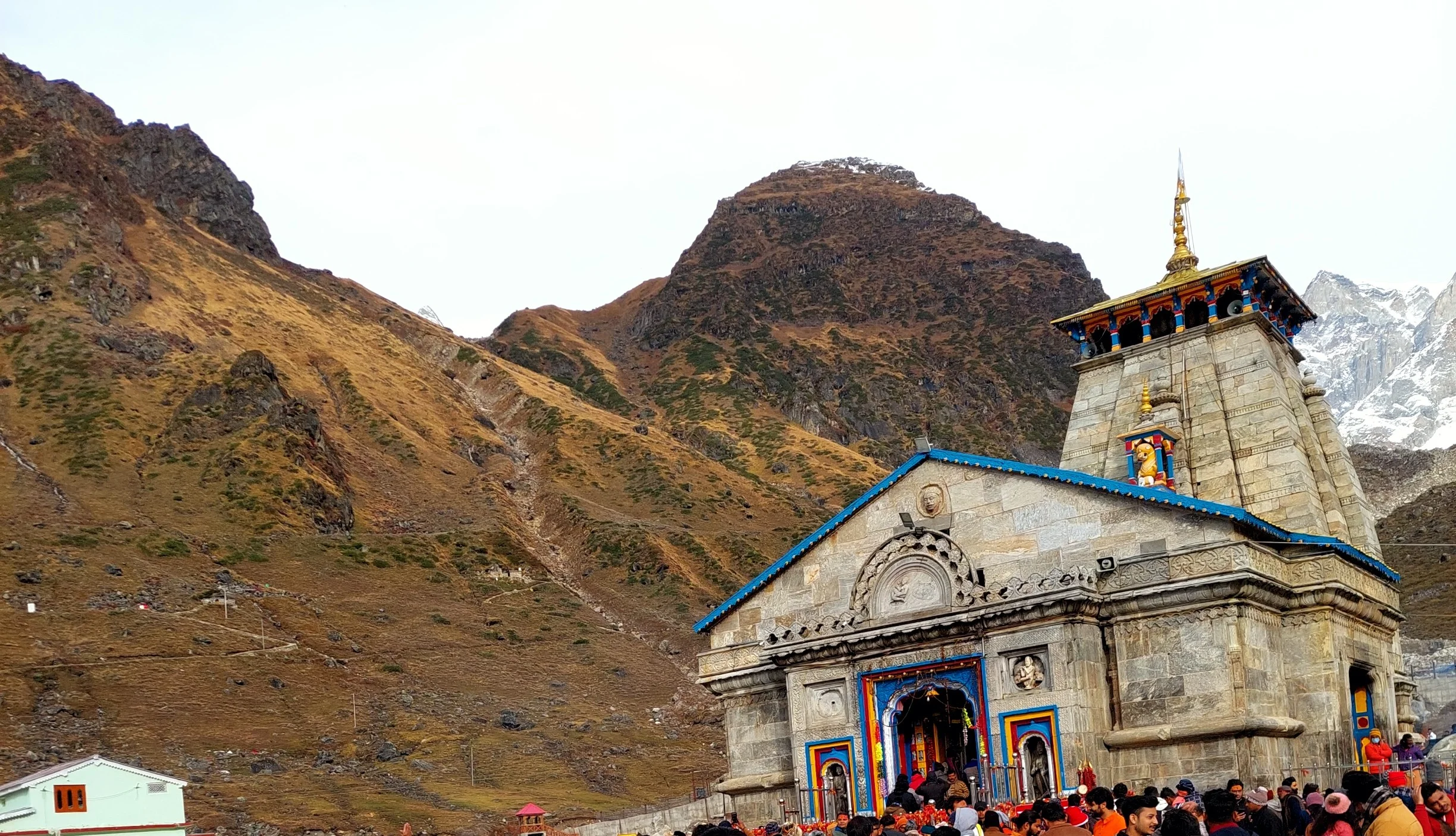
Imagine standing before an ancient stone temple, surrounded by snow-covered Himalayan peaks, while the icy waters of the Mandakini River flow nearby. The crisp mountain air carries the echoes of “Har Har Mahadev,” and thousands of devotees gather with folded hands, united by faith and devotion. This is Kedarnath, one of India’s most sacred pilgrimage destinations and a place where spirituality meets the breathtaking beauty of nature.
Situated at an altitude of 3,583 metres (11,755 feet) in the Rudraprayag district of Uttarakhand, Kedarnath is among the holiest temples dedicated to Lord Shiva. It is one of the twelve Jyotirlingas and the most remote shrine of the Chota Char Dham Yatra, which also includes Badrinath, Gangotri, and Yamunotri.
More than just a temple, Kedarnath represents faith, resilience, history, and devotion. Every year, lakhs of pilgrims undertake the challenging trek through the Garhwal Himalayas to seek the blessings of Lord Shiva, believing that the difficult journey itself is an act of spiritual purification.
The word Kedarnath comes from two Sanskrit words:
- Kedara – meaning field
- Natha – meaning Lord
Together, Kedarnath means “The Lord of the Field.”
Ancient scriptures describe this “field” not as ordinary land but as the sacred field where one can cultivate liberation (Moksha). According to the Kashi Kedara Mahatmya, Kedarnath is the place where the “crop of salvation” grows for sincere devotees.
Why is Kedarnath So Famous?
Kedarnath is revered for several reasons:
- One of the 12 Jyotirlingas of Lord Shiva
- Highest Jyotirlinga in India
- Part of the Chota Char Dham Yatra
- One of the Panch Kedar Temples
- More than 1,200 years old
- Rebuilt by Adi Shankaracharya
- Survived the devastating 2013 Uttarakhand floods
- Surrounded by majestic Himalayan peaks and glaciers
Its combination of spiritual significance, ancient heritage, and dramatic natural setting makes Kedarnath one of the most extraordinary pilgrimage destinations in the world.

The Mythological Story Behind Kedarnath Temple
The origins of Kedarnath are deeply connected with the Mahabharata.
After the devastating Kurukshetra War, the Pandavas were burdened by guilt for killing their own relatives. Seeking forgiveness, they began searching for Lord Shiva, hoping to receive his blessings and free themselves from the sins of war.
However, Lord Shiva was not ready to forgive them immediately. To avoid meeting the Pandavas, he transformed himself into a bull (Nandi) and hid in the Himalayas.
Bhima, the strongest of the Pandava brothers, recognised the unusual bull and attempted to catch it. At that very moment, Lord Shiva disappeared into the earth.
Different parts of the bull’s body appeared at five sacred locations across Uttarakhand:
- Hump – Kedarnath
- Arms – Tungnath
- Face – Rudranath
- Navel and Belly – Madhyamaheshwar
- Hair (Jata) – Kalpeshwar
These five temples together are known as the Panch Kedar.
The Pandavas later built temples at each of these locations to honour Lord Shiva and seek redemption.
Kedarnath as One of the Twelve Jyotirlingas
According to Hindu tradition, Lord Shiva manifested himself in twelve divine forms of eternal cosmic light known as Jyotirlingas.
Among these sacred shrines, Kedarnath occupies a unique position because it is located at the highest altitude. Devotees believe that visiting Kedarnath not only brings blessings but also helps cleanse accumulated karmas and guides the soul toward spiritual liberation.
This belief has attracted pilgrims for centuries despite the difficult terrain and harsh weather.
Kedarnath and the Char Dham Yatra
Kedarnath is one of the four sacred temples that form the Chota Char Dham Yatra:
- Yamunotri
- Gangotri
- Kedarnath
- Badrinath
Completing this pilgrimage is considered highly auspicious in Hinduism. Traditionally, devotees visit Yamunotri first, followed by Gangotri, Kedarnath, and finally Badrinath.
Many pilgrims believe that completing the Char Dham Yatra helps attain inner peace and spiritual purification.
History of Kedarnath Temple
Although mythology attributes the original construction of Kedarnath Temple to the Pandavas, historians believe the present structure dates back over 1,200 years.
The temple is widely believed to have been rebuilt or restored during the 8th century CE by the great philosopher and spiritual reformer Adi Shankaracharya, who revived many important Hindu pilgrimage centres across India.
A memorial dedicated to Adi Shankaracharya stands behind the temple, marking the place where tradition believes he attained Mahasamadhi.
Over the centuries, despite earthquakes, heavy snowfall, avalanches, and extreme Himalayan weather, Kedarnath Temple has remained a powerful symbol of faith and endurance.
The Incredible Architecture of Kedarnath Temple
The architecture of Kedarnath Temple continues to amaze historians, engineers, and pilgrims alike.
Constructed entirely from massive grey stone slabs, the temple stands on a large rectangular platform. The enormous stones fit together with remarkable precision, enabling the structure to withstand centuries of harsh Himalayan conditions.
The temple consists of two main sections
Garbhagriha (Sanctum)
The sanctum houses a naturally formed conical rock, worshipped as Lord Shiva in his Sadashiva form.
Unlike many temples featuring sculpted idols, Kedarnath’s Shiva Lingam has a unique pyramidal appearance, making it one of the most distinctive Jyotirlingas in India.
Mandapa (Assembly Hall)
The spacious assembly hall contains beautiful carvings of Hindu deities and scenes from mythology. Pilgrims gather here before entering the sanctum for darshan.
At the entrance stands a magnificent stone statue of Nandi, Lord Shiva’s sacred bull, silently guarding the temple.
The Stunning Natural Beauty Around Kedarnath
Kedarnath is one of the few pilgrimage destinations where nature itself feels like a place of worship.
The temple is surrounded by:
- Towering Kedarnath Peak (6,940 m)
- Kedar Dome (6,831 m)
- Snow-covered Himalayan ranges
- The sacred Mandakini River
- Chorabari Glacier
- Alpine meadows
- Crystal-clear waterfalls
- Dense Himalayan forests
Every sunrise paints the surrounding peaks in shades of gold, while evenings transform the valley into a peaceful sanctuary beneath countless stars.
This spectacular landscape enhances the spiritual atmosphere, making every visit unforgettable.
Spiritual Significance of Kedarnath
For devotees, Kedarnath is far more than a pilgrimage destination.
The journey itself is considered an act of devotion. Walking the steep mountain trail, enduring unpredictable weather, and chanting the name of Lord Shiva symbolise surrender, perseverance, and faith.
Many pilgrims describe an overwhelming sense of peace upon reaching the temple. Surrounded by the Himalayas, they experience a profound connection between nature and spirituality that is difficult to express in words.
Whether one visits for religious reasons, personal reflection, or to witness its timeless beauty, Kedarnath leaves an enduring impression on every traveller.

2013 Kedarnath Floods: A Story of Faith and Resilience
One of the most defining chapters in Kedarnath’s modern history occurred in June 2013, when devastating cloudbursts and flash floods struck Uttarakhand. Heavy rainfall caused Chorabari Lake (Gandhi Sarovar) to overflow, sending torrents of water, mud, and giant boulders rushing through the Mandakini Valley.
The town of Kedarnath suffered immense destruction, with thousands of pilgrims and residents losing their lives or going missing. Roads, bridges, homes, and shops were washed away. Yet, amid this tragedy, the Kedarnath Temple remained standing.
Many devotees believe that a massive rock, now known as Bhim Shila, rolled down the mountain and stopped behind the temple, diverting the floodwaters around the shrine. From a geological perspective, experts suggest the rock acted as a natural barrier. For pilgrims, however, it remains a symbol of Lord Shiva’s divine protection.
Today, visitors can see Bhim Shila behind the temple, where it has become an important place of reverence.
How to Reach Kedarnath
By Air
The nearest airport is Jolly Grant Airport, Dehradun, approximately 235 km from Gaurikund. Taxis and buses are available from the airport to Sonprayag or Gaurikund.
By Train
The nearest railway stations are
- Rishikesh
- Haridwar
Both stations are well connected with Delhi, Mumbai, Kolkata, Lucknow, and other major Indian cities.
By Road
Regular buses and taxis operate from
- Delhi
- Haridwar
- Rishikesh
- Dehradun
- Rudraprayag
- Srinagar (Garhwal)
The road journey ends at Sonprayag, after which local shuttle vehicles take pilgrims to Gaurikund, the starting point of the trek.
Kedarnath Trek: A Journey of Faith
The 16 km trek from Gaurikund to Kedarnath is one of India’s most spiritually rewarding pilgrimages.
The well-maintained route passes through:
- Jungle Chatti
- Bheembali
- Linchauli
- Kedarnath Base Camp
Along the route, pilgrims find:
- Tea stalls
- Medical camps
- Food courts
- Rest shelters
- Drinking water facilities
Those unable to walk can choose:
- Ponies
- Palkis
- Pitthus (porters)
- Helicopter services
The trek is moderately challenging due to the altitude and steep climb. Walking slowly, staying hydrated, and taking frequent breaks help visitors adjust to the thinner mountain air.


Helicopter Services
For elderly pilgrims, families, or travellers with limited time, helicopter services operate during the pilgrimage season from:
- Phata
- Sersi
- Guptkashi
The flight takes only a few minutes and offers spectacular aerial views of the Himalayan valleys before landing near the Kedarnath Temple.
As flights are weather-dependent, advance booking is highly recommended.
Best Time to Visit Kedarnath
The Kedarnath Temple opens every year around April or May (on Akshaya Tritiya) and closes around October or November after Diwali.
Summer (May–June)
- Pleasant weather
- Snow begins melting
- Ideal for pilgrimage
- Temperature: 10°C–20°C
Monsoon (July–August)
- Heavy rainfall
- Frequent landslides
- Travel disruptions are common
Travellers should avoid visiting during this season unless absolutely necessary.
Autumn (September–October)
- Clear skies
- Crisp mountain views
- Pleasant temperatures
- Excellent for photography and trekking
Winter (November–April)
Heavy snowfall blankets the region, making the temple inaccessible. During this period, the idol of Lord Kedarnath is ceremonially moved to Omkareshwar Temple in Ukhimath, where worship continues until the shrine reopens.
Places to Visit Near Kedarnath
Bhairavnath Temple
Located about 500 metres uphill from Kedarnath Temple, this shrine is dedicated to Lord Bhairav, believed to protect the temple during winter.
Adi Shankaracharya Samadhi
Situated behind the temple, this memorial honours Adi Shankaracharya, who is believed to have attained Mahasamadhi here.
Gandhi Sarovar
Also known as Chorabari Tal, this glacial lake lies around 3–4 km from Kedarnath and offers stunning mountain scenery.
Vasuki Tal
Located approximately 8 km from Kedarnath, this pristine alpine lake is famous for reflecting the majestic Chaukhamba peaks.
Rudra Meditation Cave
This quiet meditation cave near the temple gained attention after Prime Minister Narendra Modi meditated here in 2019. Today, visitors can book the cave for short meditation retreats.
Sonprayag
Situated at the confluence of the Mandakini and Basuki rivers, Sonprayag serves as an important halt for pilgrims and offers beautiful Himalayan landscapes.
Gaurikund
The sacred starting point of the Kedarnath trek, Gaurikund is famous for its hot water spring and the temple dedicated to Goddess Parvati.
Shopping in Kedarnath
- Rudraksha beads
- Shiva idols
- Brass bells
- Prayer malas
- Incense sticks
- Himalayan herbs
- Woollen shawls
- Hand-knitted caps
- Wooden carvings
- Traditional Garhwali handicrafts
Buying local handicrafts supports the mountain communities that depend on tourism for their livelihood.

Travel Tips for Kedarnath
- Register for the Char Dham Yatra before travelling.
- Carry valid ID proof.
- Pack warm clothing even during summer.
- Wear waterproof trekking shoes.
- Carry rain protection.
- Drink plenty of water to prevent altitude sickness.
- Start the trek early in the morning.
- Keep basic medicines with you.
- Avoid plastic waste and help preserve the fragile Himalayan ecosystem.
- Respect local customs and temple traditions.
Why Every Traveller Should Visit Kedarnath
Kedarnath is much more than a temple. It is a destination where mythology, history, nature, and spirituality come together in extraordinary harmony.
Whether you are a devotee seeking Lord Shiva’s blessings, an adventurer exploring the Himalayas, or a traveller searching for peace, Kedarnath offers an unforgettable experience.
Watching the first rays of sunlight illuminate the ancient temple while the chants of “Har Har Mahadev” echo through the valley is a moment that remains etched in memory forever.
The challenging journey, breathtaking landscapes, centuries-old traditions, and unwavering faith of millions make Kedarnath one of India’s most inspiring destinations.
Frequently Asked Questions (FAQs)
Where is Kedarnath Temple located?
Kedarnath Temple is located in the Rudraprayag district of Uttarakhand at an altitude of approximately 3,583 metres.
Why is Kedarnath famous?
It is one of the twelve Jyotirlingas of Lord Shiva and one of the four sacred shrines of the Chota Char Dham Yatra.
How long is the Kedarnath trek?
The trek from Gaurikund to Kedarnath is approximately 16 km.
What is Bhim Shila?
Bhim Shila is the massive rock behind Kedarnath Temple that diverted floodwaters during the 2013 disaster and is regarded as a symbol of divine protection.
When does Kedarnath Temple open?
The temple usually opens in April or May on Akshaya Tritiya and closes around October or November after Diwali.
Is helicopter service available?
Yes. Seasonal helicopter services operate from Phata, Sersi, and Guptkashi, subject to weather conditions.
Conclusion
Kedarnath is not merely a destination—it is a journey that transforms the traveller. From the timeless legend of the Pandavas and Lord Shiva to the temple’s remarkable survival during the 2013 floods, every stone in Kedarnath tells a story of faith, perseverance, and hope.
Surrounded by the majestic Garhwal Himalayas, the sacred Mandakini River, and centuries of spiritual tradition, Kedarnath continues to inspire millions of pilgrims and travellers each year. Whether you come seeking blessings, adventure, or inner peace, the experience of standing before this ancient shrine is unforgettable.
As the chants of “Har Har Mahadev” echo across the mountains and the first rays of sunlight illuminate the temple’s stone walls, one realises that Kedarnath is far more than a place on a map—it is a timeless symbol of devotion, resilience, and the enduring spirit of the Himalayas.

